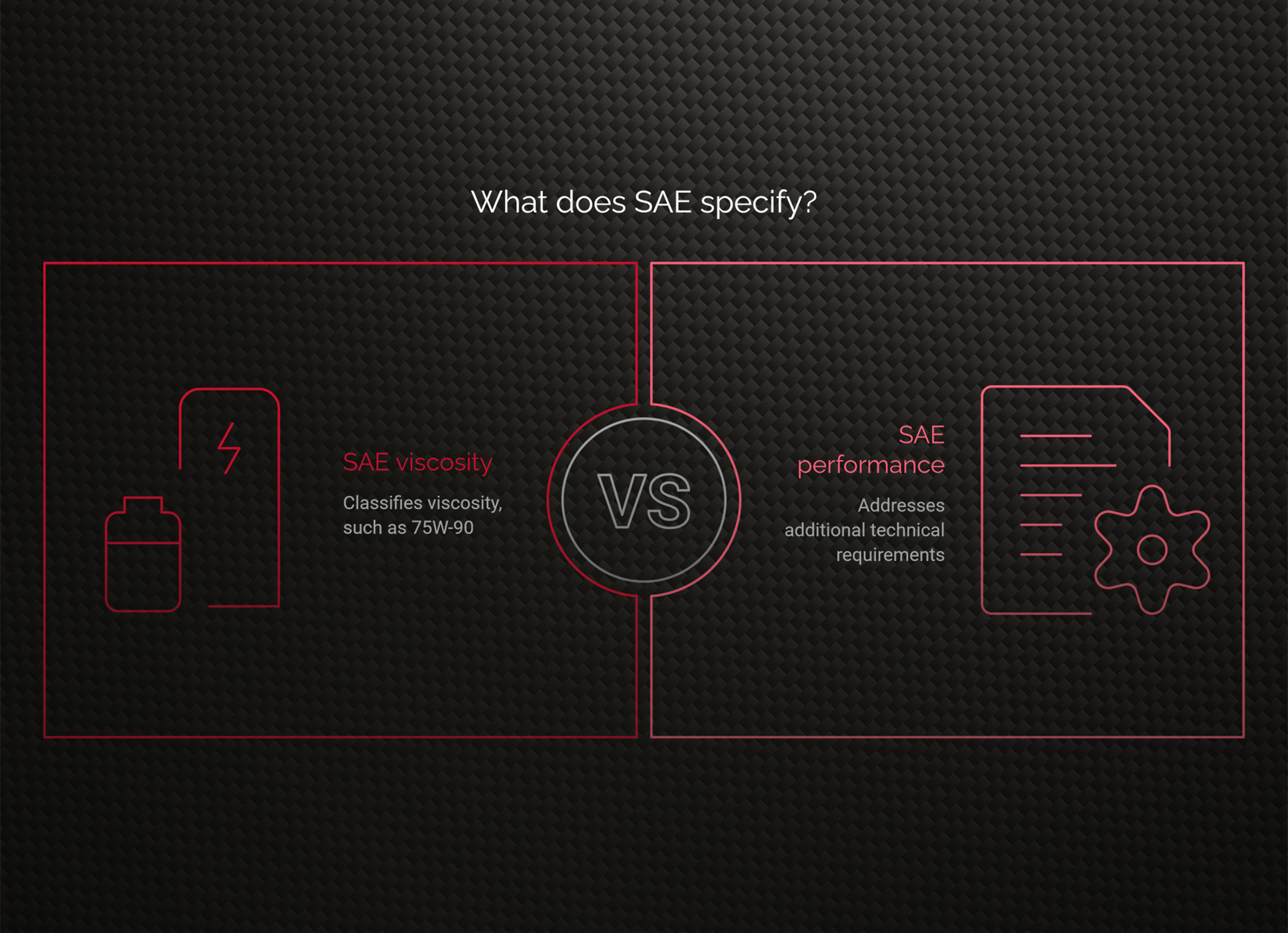

SAE specifications help workshops, fleet operators and lubricant distributors interpret the viscosity grades printed on oil labels. Designations such as SAE 5W-30, 0W-20 and 75W-90 describe viscosity characteristics that matter when selecting a lubricant.
However, viscosity is only one part of the selection process. An oil must also meet the performance requirements and manufacturer specifications for the equipment concerned. Understanding this distinction helps prevent a common mistake: treating two oils with the same SAE grade as interchangeable.
SAE International develops technical standards for automotive and other engineering applications. For lubricant viscosity, two particularly important documents are:
SAE standard | Application | What it classifies |
SAE J300 | Engine oils | Engine-oil viscosity grades, such as 0W-20 and 5W-30 |
SAE J306 | Automotive gear lubricants | Driveline-lubricant viscosity grades, such as 75W-90 |
Both classifications address viscosity-related properties. Their scopes explicitly exclude other lubricant characteristics. The published revisions are SAE J300, May 2024, and SAE J306, February 2025.
An SAE viscosity grade therefore does not, by itself, establish wear protection, deposit control, oxidation resistance or compatibility with a particular engine or gearbox.
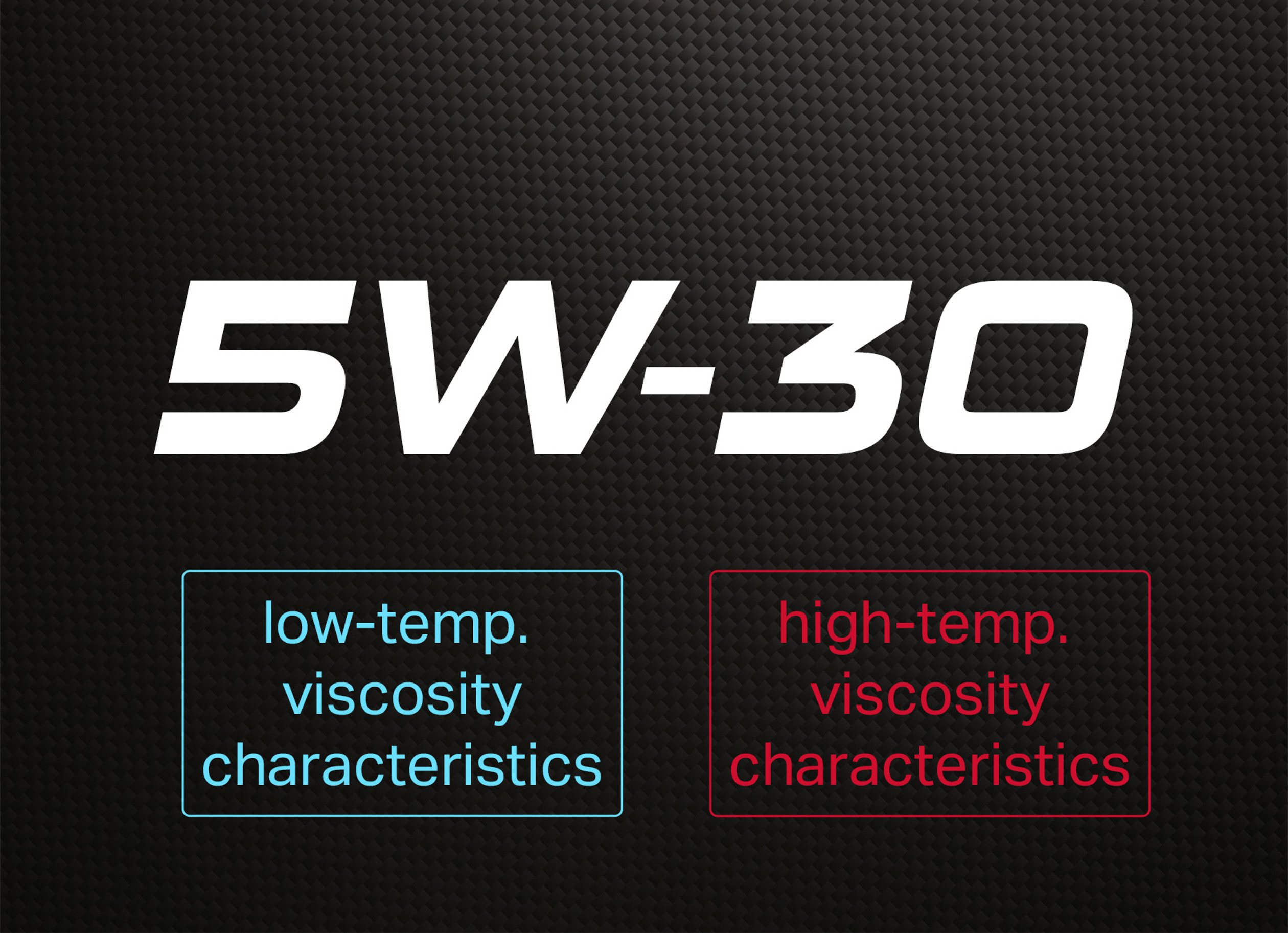
Consider SAE 5W-30. The designation combines a low-temperature grade with a high-temperature grade.
The letter W stands for winter. The 5W designation relates to the oil’s low-temperature viscosity characteristics, including its behaviour during engine cranking and pumping.
A lower W grade corresponds to requirements at lower test temperatures. This makes the winter grade relevant to cold starts, but it is not a direct ambient-temperature rating: 5W does not mean “suitable down to −5°C.”
The second number identifies the high-temperature viscosity grade. It does not represent an outside temperature or an oil-change interval.
A 5W-30 oil must satisfy the requirements for both parts of its designation. The numbers do not mean that the oil becomes thicker as the engine warms. Engine oils generally become less viscous as their temperature rises.
Similarly, 0W-30 and 5W-30 share the same high-temperature grade while meeting different winter-grade requirements. That alone does not establish whether either oil is suitable for a particular engine.
Engine-oil classification involves more than measuring how quickly oil pours from a container. Relevant measurements examine different operating conditions:
Cold-cranking viscosity relates to the resistance the oil presents during low-temperature engine cranking.
Low-temperature pumping behaviour concerns the oil’s ability to reach the pump and circulate.
Kinematic viscosity at 100°C measures flow behaviour under defined laboratory conditions.
High-temperature, high-shear viscosity, commonly called HTHS, assesses viscosity under elevated temperature and shear conditions.
These measurements provide different information. ASTM specifically explains that a cold-cranking result cannot be used to predict low-temperature flow to the oil pump and distribution system. This is why cranking and pumping require separate assessment. See ASTM’s explanation of the cold-cranking test and the API overview of engine-oil testing.

Automotive gear lubricants use a separate classification system. A designation such as SAE 75W-90 belongs to SAE J306 rather than the engine-oil classification in SAE J300.
The distinction matters because the numbering systems are different. A gear-oil grade of 90 cannot be compared directly with an engine-oil grade of 30 or 40 simply by comparing the numbers.
A 75W-90 designation also does not establish whether the lubricant is suitable for every manual transmission, differential or axle. The required performance specification and equipment-manufacturer requirements still need to be checked.
For distributors and workshops, the practical rule is straightforward: identify the application and its classification system before comparing viscosity grades. SAE J306 defines the scope of the automotive gear-lubricant classification.
Viscosity describes one aspect of an oil’s behaviour. Performance specifications address additional requirements for its intended service.
API makes this distinction visible in its Service Symbol, or “Donut”: the performance category and SAE viscosity grade appear as separate elements. Matching the viscosity grade does not automatically match the performance category.
For example, API CK-4 and API FA-4 oils can both carry an SAE 10W-30 designation, yet API states that FA-4 oils are not interchangeable with CK-4 oils. Engine-manufacturer recommendations determine suitability. API’s Motor Oil Guide explains these separate requirements.
This distinction also matters when comparing product data sheets. “5W-30” is a useful starting point, but it is not a complete product specification.
No. Although J300 and J306 classify viscosity, SAE also publishes lubricant performance standards.
One example is SAE J2360, which addresses automotive gear lubricants for commercial and military use. It is a separate specification from the J306 viscosity classification. A reference to J2360 therefore carries a different meaning from a grade such as 75W-90. SAE publishes J2360 as a distinct automotive gear-lubricant standard.
This is why the complete reference matters: “SAE specification” can describe either a viscosity classification or another type of technical requirement.
Start with the vehicle or equipment manufacturer’s lubrication instructions. Identify the specified viscosity grade, then check the required performance specifications and approvals against the lubricant’s current technical documentation.
For workshop purchasing and distributor recommendations, record those requirements together. A request for “5W-30 engine oil” or “75W-90 gear oil” may need further application details before a suitable product can be identified.
SAE grades make viscosity easier to communicate. Reliable lubricant selection comes from matching that grade with the complete requirements of the engine or driveline being serviced.