

ISO specifications help distributors, workshops and maintenance teams communicate lubricant requirements. References such as ISO VG 46, ISO 11158 and ISO 4406 appear in product documentation, equipment manuals and oil-analysis reports.
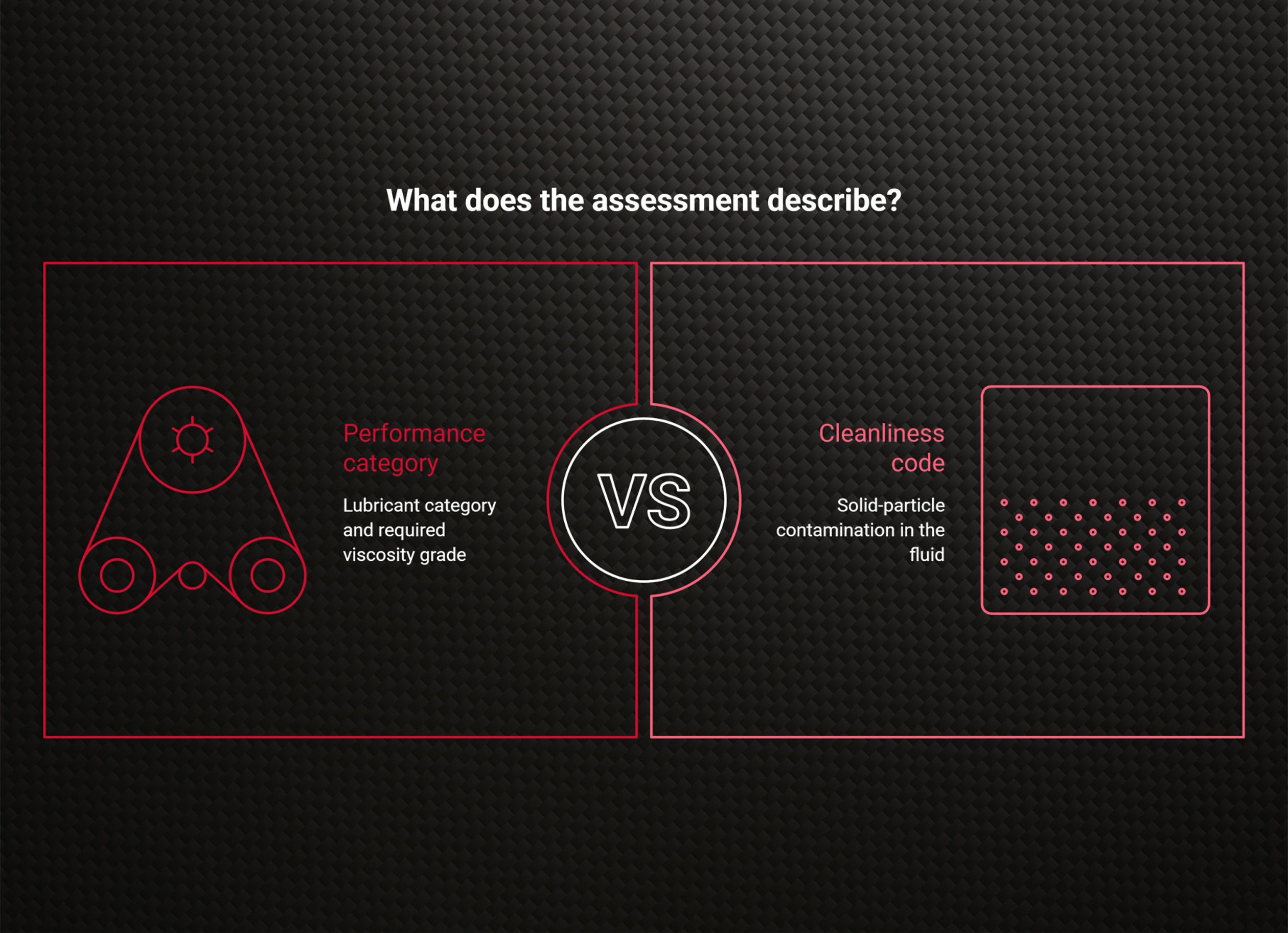
These references describe different aspects of lubrication. A viscosity grade identifies a fluid’s viscosity range under defined conditions. A performance specification sets requirements for particular lubricant categories. A cleanliness code describes particle contamination.
Understanding these distinctions helps buyers compare products and assess whether a proposed lubricant matches the equipment manufacturer’s requirements.
ISO, the International Organization for Standardization, develops standards covering many aspects of lubricants, including classification, performance requirements and measurement methods.
The expression “ISO specifications” is often used broadly, but the specific standard matters. A reference to viscosity classification does not establish compliance with a hydraulic-oil performance specification.
The following standards illustrate these different functions:
Standard and edition | Main subject |
Viscosity classification for industrial liquid lubricants | |
Classification of hydraulic fluids | |
Requirements for specified mineral-oil hydraulic-fluid categories | |
Specifications for lubricants used in enclosed gear systems | |
Coding of solid-particle contamination in hydraulic fluids |
A single application may require several of these references together. For example, a hydraulic system can have separate requirements for viscosity, fluid performance and cleanliness.
ISO VG stands for ISO viscosity grade. The classification defined in ISO 3448:1992 provides a common system for describing the viscosity of industrial liquid lubricants.
The grade relates to kinematic viscosity at 40°C. A designation such as ISO VG 46 identifies a viscosity band; it does not mean that every oil carrying that designation has an identical measured viscosity.
A viscosity grade alone does not establish wear protection, oxidation resistance or suitability for a particular machine. Those characteristics need to be assessed through the relevant performance requirements and product documentation.
Temperature behaviour also matters. Two oils with the same ISO VG grade can have different viscosities at other temperatures. A shared grade therefore does not, by itself, establish that two products are interchangeable.
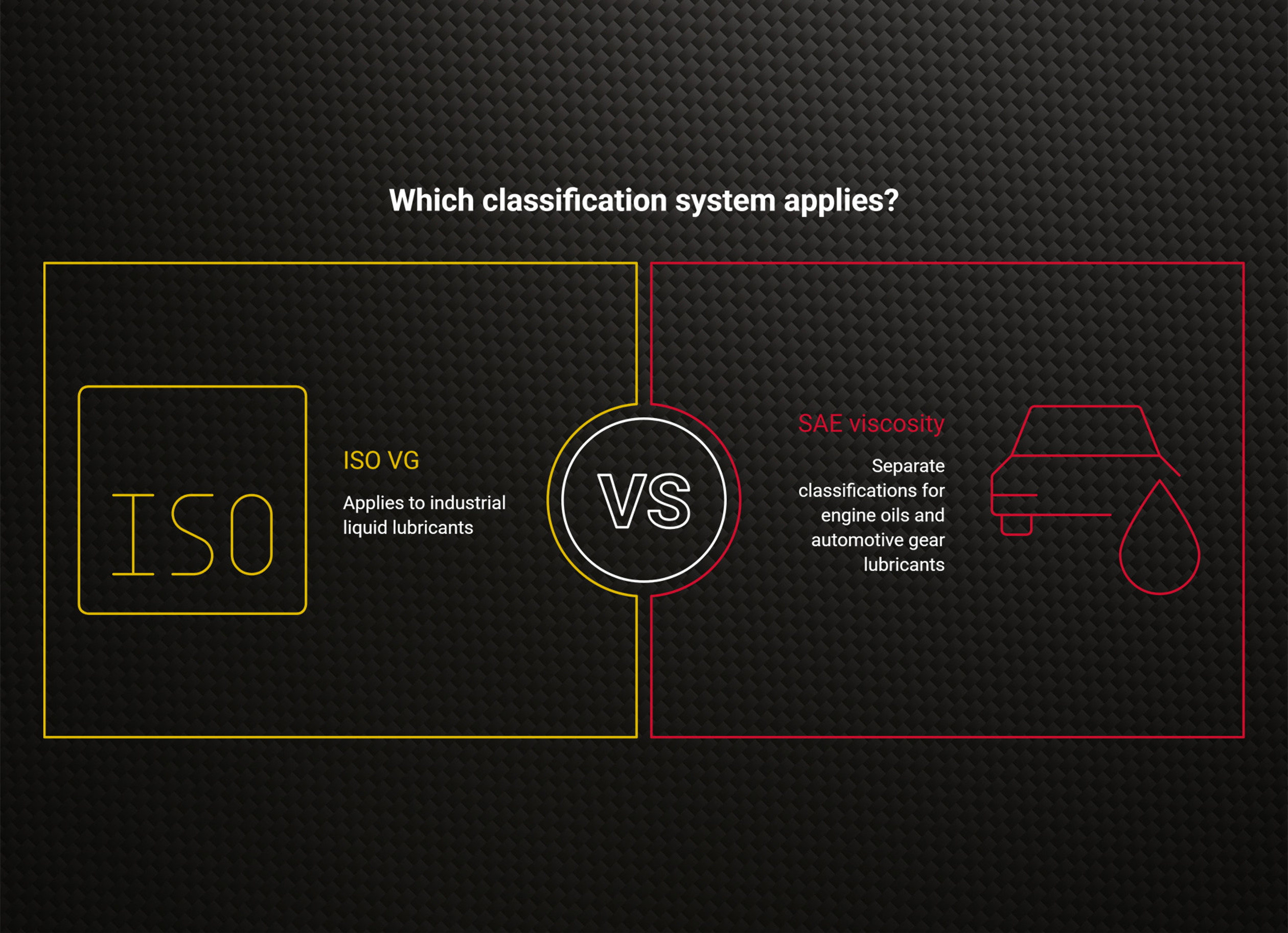
ISO VG and SAE viscosity grades belong to different classification systems.
ISO VG applies to industrial liquid lubricants. SAE International publishes separate classifications for engine oils and automotive gear lubricants. For example, SAE J300, revised May 2024, classifies engine oils by their rheological properties, while SAE J306 addresses automotive gear-lubricant viscosity.
Numbers from these systems cannot be compared directly as if they used the same scale. A viscosity comparison also cannot establish that two oils satisfy the same application or performance requirements.
Before assessing a hydraulic fluid’s performance, it is important to identify its category.
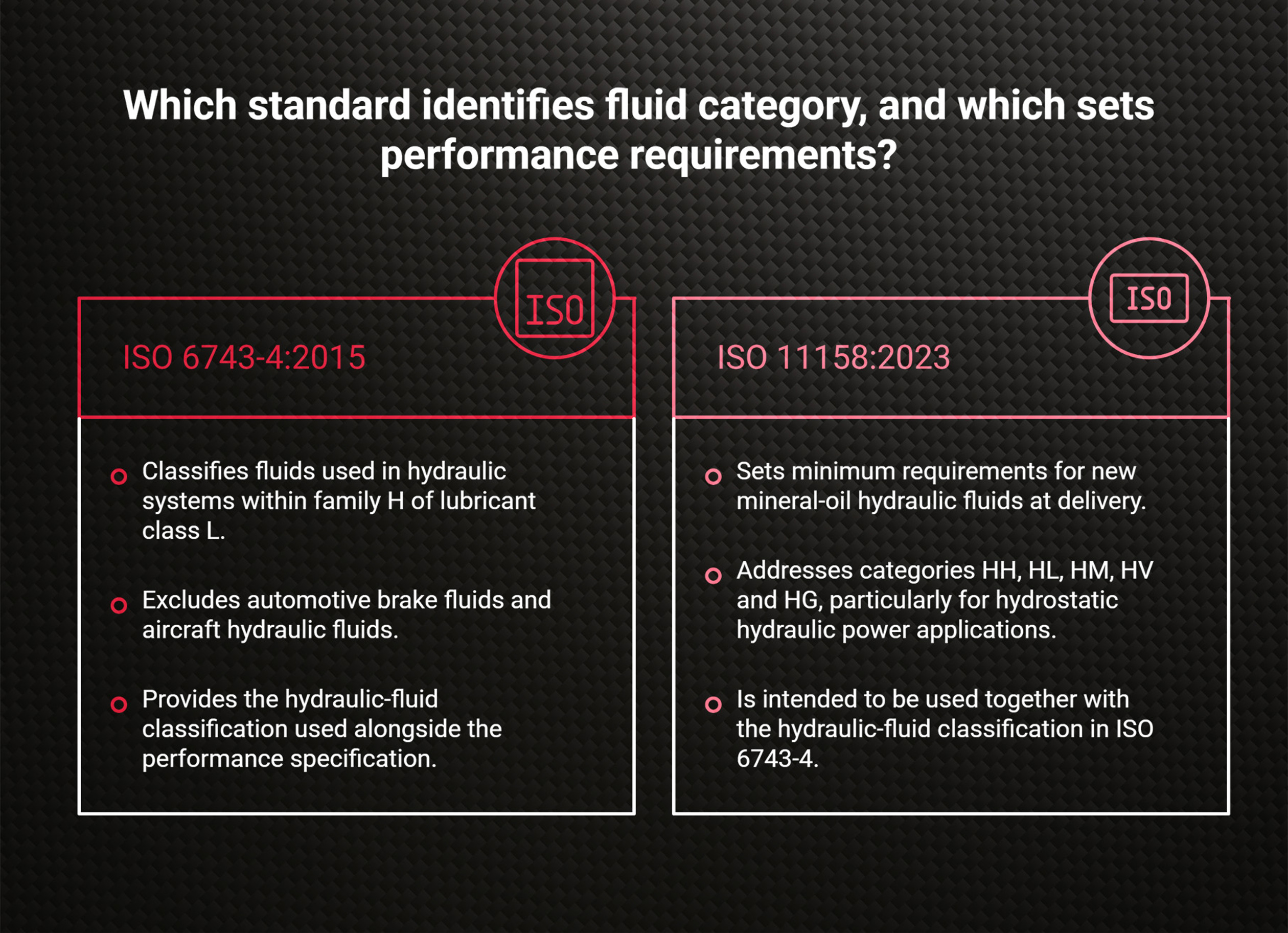
ISO 6743-4:2015 classifies fluids used in hydraulic systems within family H of lubricant class L. Its scope excludes automotive brake fluids and aircraft hydraulic fluids.
This distinction matters because “hydraulic fluid” describes a broad application area. A fluid intended for one hydraulic system should not automatically be assumed suitable for another.
Classification provides a way to identify the fluid category. The relevant performance specification then provides requirements against which that fluid can be assessed.
ISO 11158:2023 addresses new mineral-oil hydraulic fluids in categories HH, HL, HM, HV and HG. It sets minimum requirements at delivery and is intended to be used together with the hydraulic-fluid classification in ISO 6743-4.
Its scope is particularly relevant to hydrostatic hydraulic power applications. It does not cover every hydraulic-fluid technology or all exceptional operating conditions. Unusual service conditions may require additional testing and acceptance criteria agreed between the parties involved.
For purchasing, “ISO VG 46 hydraulic oil” is therefore an incomplete performance requirement. It identifies a viscosity grade but leaves the required fluid category and performance specification unspecified.
A clearer request identifies the applicable specification, the required category, the viscosity grade and any additional equipment-manufacturer requirements. Suppliers can then compare a proposed product against a defined requirement.
Industrial gear oils also need to be assessed beyond viscosity.
ISO 12925-1:2024 covers lubricants for enclosed gear systems. Its scope includes categories such as CKC, CKD and CKSMP, alongside other gear-lubricant categories.
These category references provide information that a viscosity designation such as ISO VG 220 cannot supply on its own. When comparing products, both the relevant performance category and the required viscosity grade should be retained.
The application boundary is important: Part 1 does not cover lubricants for open gears or gear greases. Those are addressed in other parts of the ISO 12925 series.
A product description such as “industrial gear oil” is consequently too broad to demonstrate suitability for every gear-lubrication application.
ISO 4406:2021 provides a system for reporting solid-particle contamination in hydraulic fluids.
A cleanliness code answers a different question from a viscosity grade or performance specification. It describes particle contamination in the fluid being assessed; it does not identify the oil’s viscosity or establish its additive performance.
For maintenance teams, this means that fluid identity and fluid cleanliness should be recorded separately. Selecting an oil with the required performance specification does not demonstrate the cleanliness of a particular delivered or in-service sample.
Similarly, an acceptable particle-contamination result does not prove that the sample contains the correct lubricant for the equipment.
The phrase “ISO certified” needs a precise explanation of what has been certified.
ISO 9001 concerns an organisation’s quality management system. Certification of that system does not, by itself, demonstrate that an individual lubricant meets a hydraulic-oil specification, a gear-oil specification or an equipment-manufacturer approval requirement. ISO explains this management-system context in its overview of quality management standards.
ISO develops standards but does not itself certify companies or products. Certification is carried out by external certification bodies. ISO’s explanation of certification makes this distinction explicit.
When assessing product documentation, distinguish between a supplier’s conformity statement, a third-party certificate and an equipment-manufacturer approval. Each claim should identify its scope and be supported by the relevant documentation.
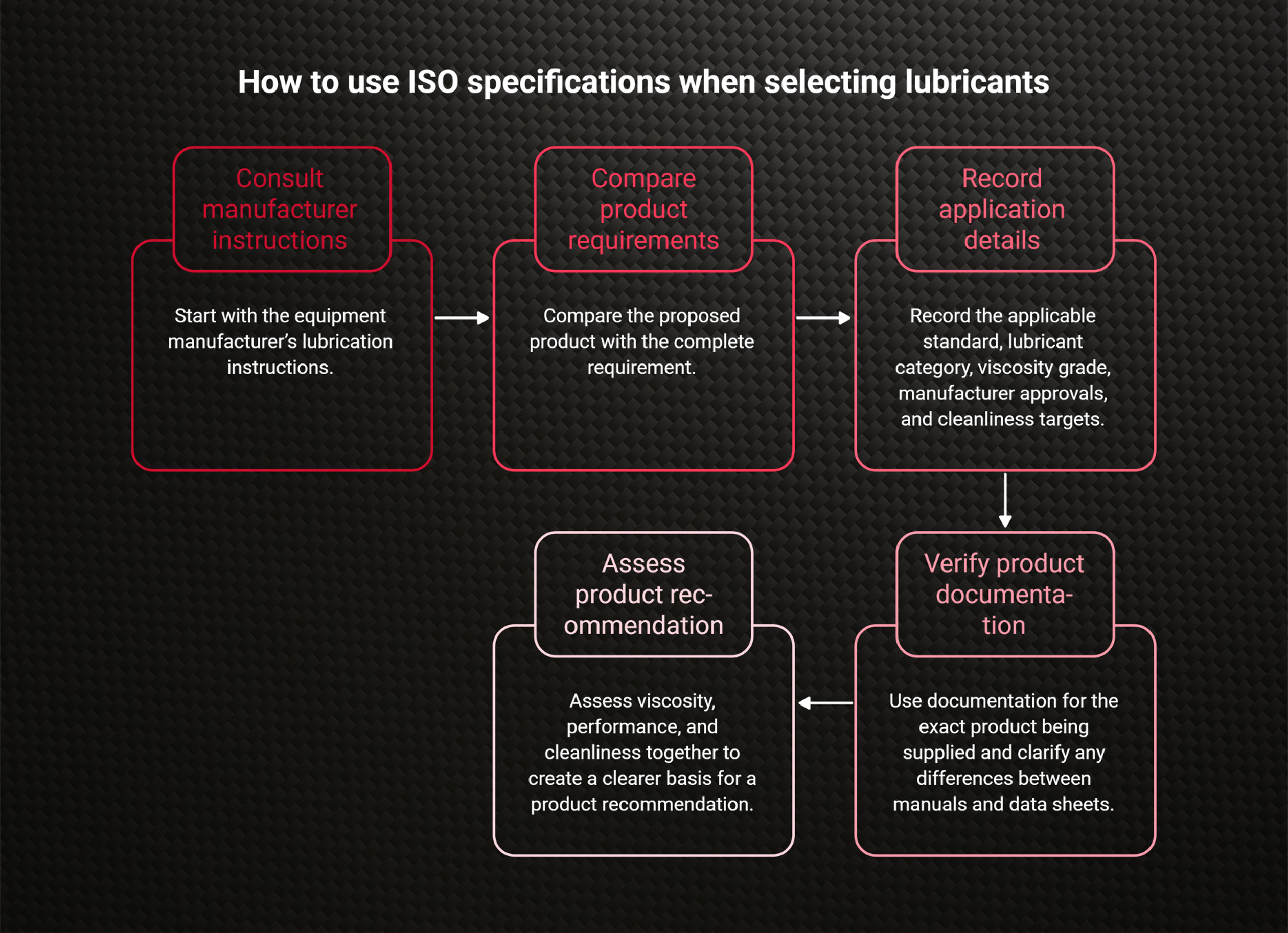
Start with the equipment manufacturer’s lubrication instructions. Then compare the proposed product with the complete requirement.
For each application, record:
The applicable standard and edition where specified.
The required lubricant category.
The viscosity grade.
Any additional manufacturer specifications or approvals.
Any specified cleanliness target and the conditions under which it applies.
Use documentation for the exact product being supplied. If a manual and a product data sheet refer to different editions or categories, clarify the difference before treating them as equivalent.
For distributors, workshops and maintenance teams, the practical value of ISO references lies in this precision. Viscosity, performance and cleanliness each provide part of the information needed to select and manage a lubricant. Assessing them together creates a clearer basis for a product recommendation.