
ILSAC specifications help identify passenger-car petrol engine oils that combine engine protection with fuel-economy performance. They appear on lubricant labels, technical data sheets and vehicle maintenance instructions.
For distributors and automotive professionals, the most important distinction is between GF-7A and GF-7B. Selecting the correct standard also requires matching the manufacturer’s specified viscosity and any additional oil requirements.
ILSAC is the International Lubricant Specification Advisory Committee, formerly known as the International Lubricant Standardization and Approval Committee. It brings together American and Japanese vehicle-manufacturer interests to develop minimum performance standards for passenger-car petrol engine oils.
These standards cover engine tests, laboratory tests and chemical and physical properties. Individual vehicle manufacturers may require additional performance or stricter limits. An ILSAC claim therefore does not replace a manufacturer-specific approval. API 1509 contains the formal requirements.
As of October 2026, GF-7A and GF-7B are the current ILSAC standards. They were introduced in March 2025.
API identifies GF-6A and GF-6B as obsolete from 1 October 2026, directing users to GF-7A and GF-7B respectively. Earlier standards, including GF-5, are also obsolete. These status changes should be reflected in current product documentation. API’s Motor Oil Guide provides the transition guidance.
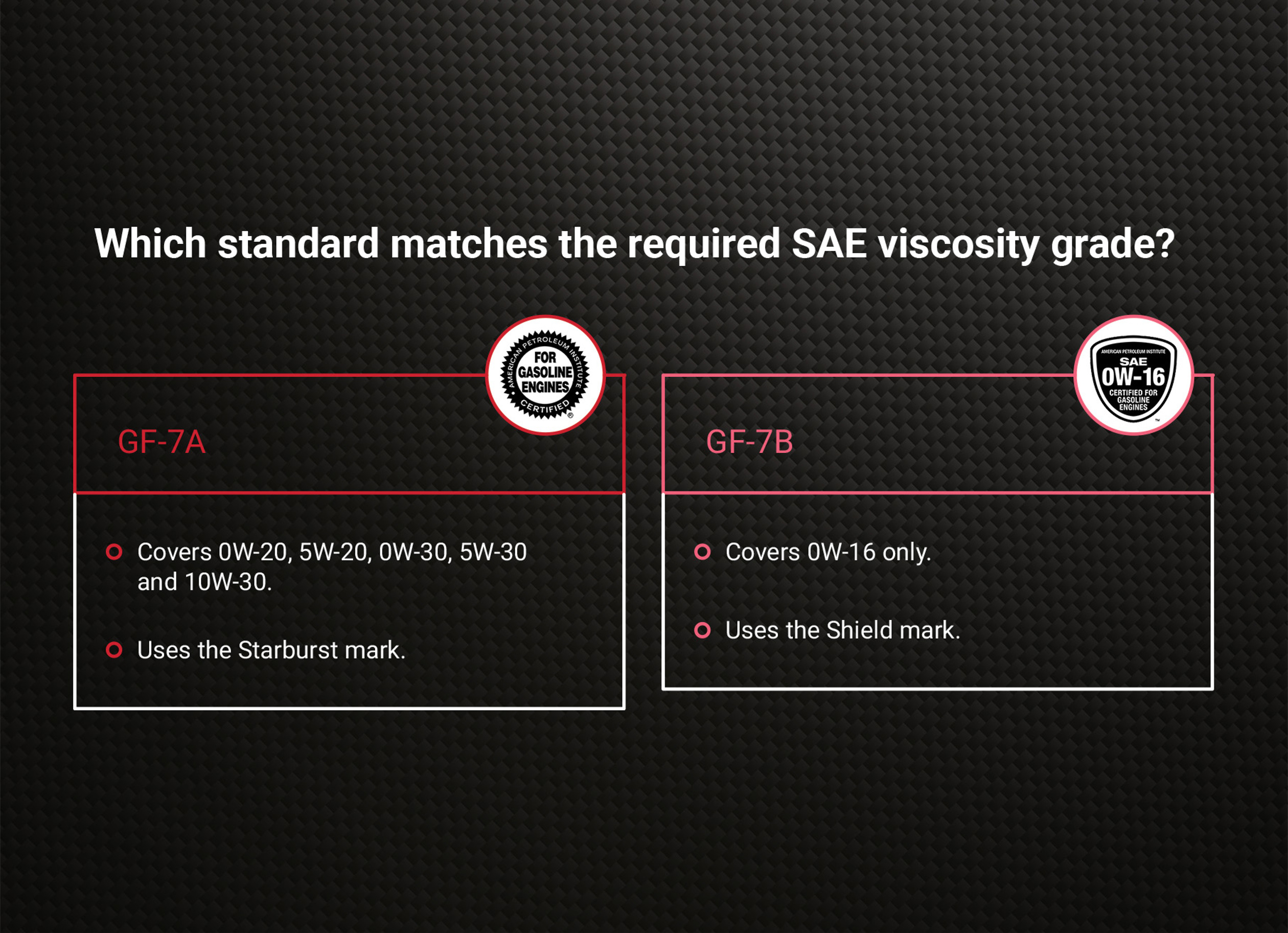
The two standards serve different viscosity applications.
Standard | Eligible SAE viscosity grades | API certification mark |
GF-7A | 0W-20, 5W-20, 0W-30, 5W-30 and 10W-30 | Starburst |
GF-7B | 0W-16 only | Shield |
The viscosity scope is defined in API 1509, while API’s guide explains the certification marks.
GF-7B does not cover SAE 0W-8 or 0W-12. Its “B” designation also does not mean that it is a universal upgrade from GF-7A.
GF-7 combines requirements for:
Low-speed pre-ignition protection with fresh and aged oil.
Timing-chain wear protection.
Piston and turbocharger deposit control.
Sludge and varnish control.
Fuel economy and emission-system protection.
Low-temperature pumpability.
API also identifies protection for engines operating on ethanol-containing fuels up to E85. This does not authorise using E85 in a vehicle that is not designed for it. API’s Motor Oil Guide summarises these performance objectives.
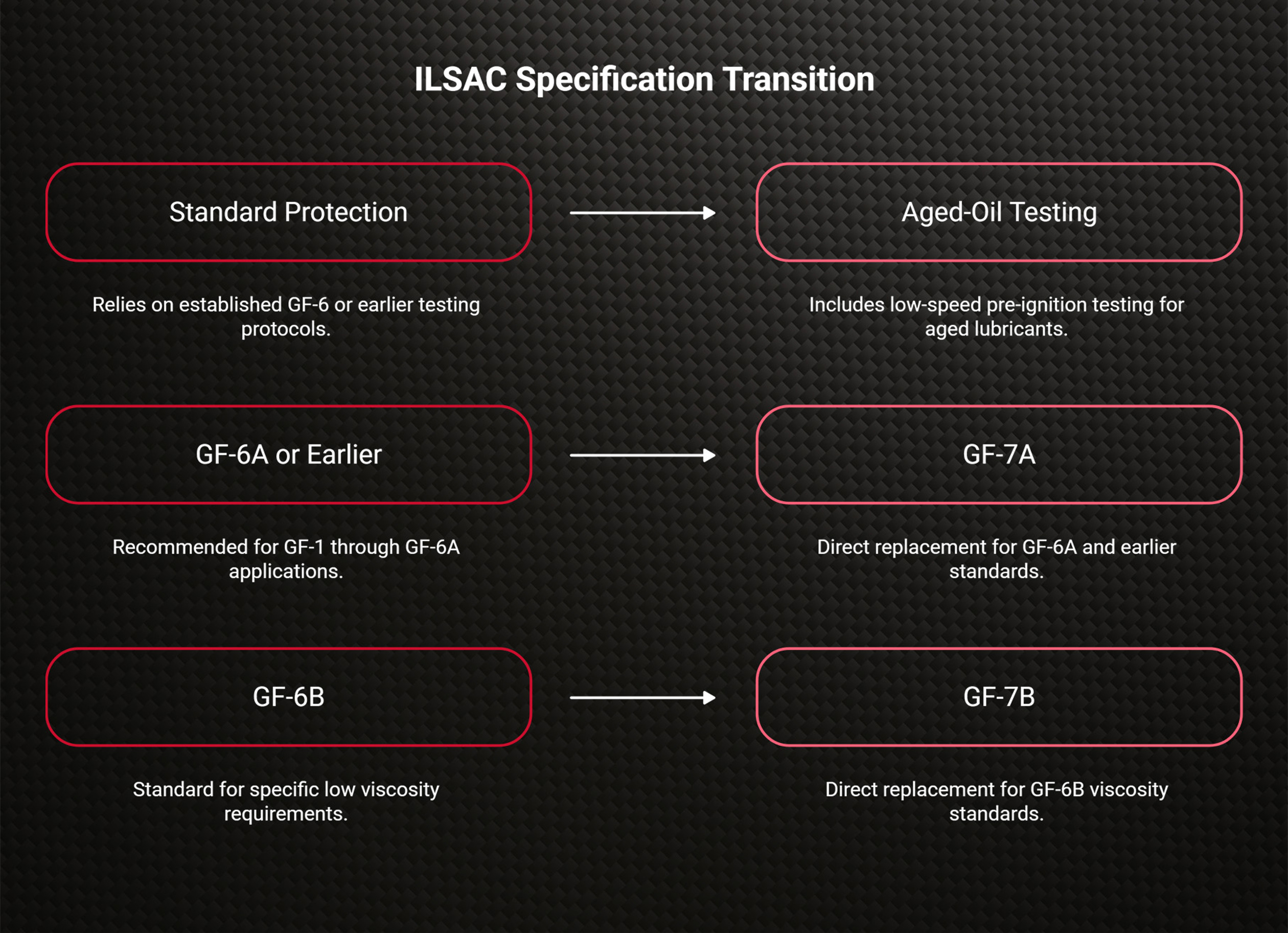
Oil performance needs to remain effective as the lubricant ages. GF-7 includes aged-oil low-speed pre-ignition testing alongside its other protection requirements.
The development programme also addressed piston cleanliness, timing-chain wear and fuel-economy testing. These priorities are documented in the ILSAC April 2026 technical update.
API directs users to GF-7A where GF-6A or earlier GF-1 through GF-5 standards are recommended, and to GF-7B where GF-6B is recommended. The manufacturer’s viscosity and additional requirements still apply. API’s replacement guidance preserves this distinction.
For example, replacing a specified GF-6A 5W-30 with a suitable GF-7A 5W-30 follows the relevant standards progression. Switching to GF-7B 0W-16 changes the viscosity application and requires manufacturer authorisation.
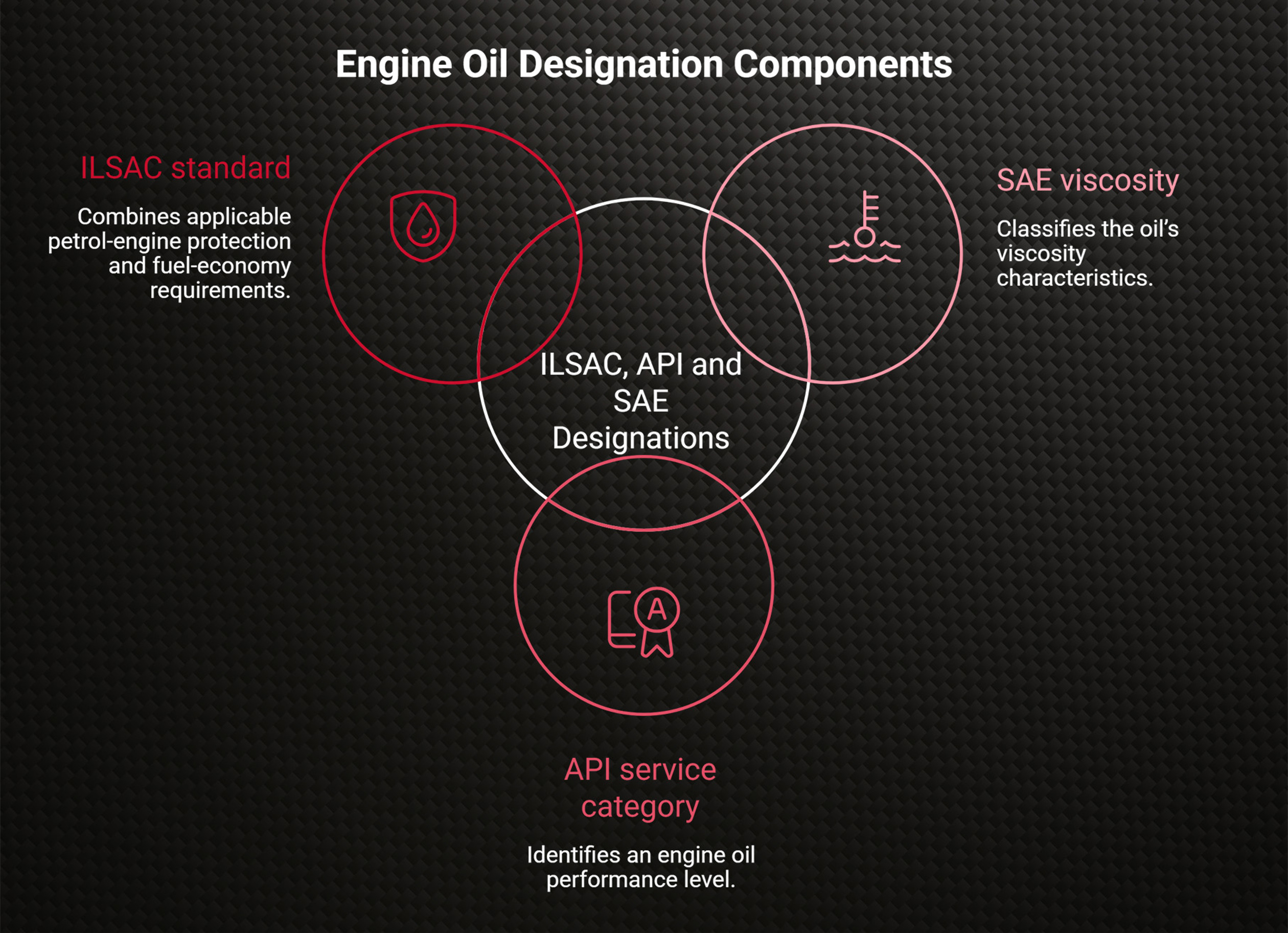
Each designation contributes different information:
SAE viscosity classifies the oil’s viscosity characteristics.
API service category identifies an engine oil performance level.
ILSAC standard combines applicable petrol-engine protection and fuel-economy requirements.
SAE J300 covers viscosity characteristics rather than overall oil performance. Consequently, a 5W-30 label alone cannot establish ILSAC compliance. SAE’s scope statement makes that distinction explicit.
API SQ with Resource Conserving corresponds to GF-7A; API SQ alone should not automatically be interpreted as a GF-7A claim. API’s guide explains the relationship.
API operates the voluntary Engine Oil Licensing and Certification System, which authorises qualifying marketers to display its quality marks and includes marketplace monitoring. A statement that an oil “meets” an ILSAC standard is not, by itself, confirmation of an API licence. API’s licensing overview explains the programme.
When certification is claimed, verify the exact brand, viscosity and category in the API EOLCS Licensee Directory. Keep the current technical data sheet with purchasing and workshop records.
Effective oil selection brings together the required ILSAC standard, permitted viscosity and manufacturer-specific requirements. Checking all three helps distributors and workshops recommend a suitable product and explain precisely why it fits the application.